
"Central and South America"
1000 article(s) found

The flavor of Honduran coffee. The kind of coffee from Central America. The picking method of Honduran coffee.
Honduras: special highland coffee flavor and taste characteristics: good flavor, rich and mellow, suitable for mixed drinking. Honduras is located in the north of Central America, facing the Caribbean Sea to the north, the Gulf of Fonseca in the Pacific Ocean to the south, Nicaragua and El Salvador to the east and south, and Guatemala to the west, mostly mountains and plateaus. It has a tropical climate, mild temperature, abundant rainfall, and is a coffee producer.

Salvadoran coffee beans Salvadoran coffee refers to Salvadoran hot spring coffee from South America
Many coffee lovers will not know the country of El Salvador, which is located in Central America, bordered by Guatemala and Honduras in the north, and the Pacific coastline in the west and south. El Salvador is the smallest country in Central America and the most densely populated country in Central America. The topography is mainly mountainous and plateau, with many volcanoes. Santa Ana active volcano is 2385 meters above sea level.
The world's major coffee producing areas introduce the basic knowledge of fine coffee coffee beans represented by all continents
Coffee comes from coffee beans, which are harvested and processed from the fruit of trees. Coffee trees grow at the center of the equator, between latitudes of 25 degrees south and north, and are called the homes of tropical or subtropical countries called coffee belts. At present, there are about 60 coffee-producing countries. Coffee is produced in South America, Central America, the West Indies, Asia, Africa, Arabia, the South Pacific and

The advantages and disadvantages of growing coffee in Brazil are suitable for coffee-growing countries in Central and South America.
There are many large farms in Brazil, which run endless coffee plantations. They use machines to harvest and dry them. They are so efficient in automation that they regard coffee as a general agricultural material and completely abandon the flavor and flavor. As a result, many select coffee companies simply do not sell Brazilian beans so as not to demean themselves. In select coffee shops, Santos in Brazil still appears occasionally.

Bright citrus acidity, round fruit taste Panama Cassah coffee flavor, character, taste and
Panama is located on the Isthmus of Panama in Central America, bordering Colombia to the east, the Pacific Ocean to the south, Costa Rica to the west and the Caribbean Sea to the north. The territory is S-shaped connecting North America and South America, and the Panama Canal connects the Atlantic Ocean and the Pacific Ocean from north to south, known as the world bridge. [5]Panama covers an area of 75517 square kilometers, with a length of 772 kilometers and a width of 60 to 1.

Learn more about the description of Central American boutique coffee on the coffee map.
Central America is a land bridge connecting North and South America. There are seven countries, namely, Belize, Costa Rica, El Salvador, Guatemala, Honduras, Nicaragua and Panama. Seven Central American countries all produce coffee, with Guatemala, Costa Rica and Honduras among the top 10 coffee exporters in the world. Coffee started in Central America in the 18th century, an important economy.

What are the main coffee producing areas? where is the origin of famous coffee?
Coffee comes from coffee beans, which are harvested and processed from the fruit of trees. Coffee trees grow at the center of the equator, between latitudes of 25 degrees south and north, and are called the homes of tropical or subtropical countries called coffee belts. At present, there are about 60 coffee-producing countries. Coffee is produced in South America, Central America, the West Indies, Asia, Africa, Arabia, the South Pacific and

Introduction to the main Coffee producing areas in the World
Coffee comes from coffee beans, which are harvested and processed from the fruit of trees. Coffee trees grow at the center of the equator, between latitudes of 25 degrees south and north, and are called the homes of tropical or subtropical countries called coffee belts. At present, there are about 60 coffee-producing countries. Coffee is produced in South America, Central America, the West Indies, Asia, Africa, Arabia, the South Pacific and

Central and South American style of coffee in Nicaragua coffee producing areas
Nice acidity, moderate alcohol Nicaragua coffee belongs to Central and South American style coffee, although the acidity is not very high, but feel fresh. The alcohol level was also not high, but the overall feeling was just right, neither weak nor too thick. Make it easier to accept. The taste of red wine can be vaguely felt in the light sourness, which is also a major feature of Nicaragua coffee.

El Salvador Coffee, the smallest coffee producer in Central America, introduces Siberi in the Santa Ana volcano region.
It is located in Central America, bordering Guatemala and Honduras in the north, and the Pacific coastline in the west and south. The smallest country in Central America and the most densely populated country in Central America. The land area is 21393 square kilometers, the population is 6.25 million (data 2012), and the population density is 327 people / square kilometers. The economy is dominated by agriculture. In 2011, per capita domestic production

Introduction to the characteristics of the taste production area of coffee grindability treatment in Ireta Manor, Panama
Central America is a long isthmus from northern Mexico to southern Colombia, connecting North and South America. Panama is located in the southernmost part of Central America, so the country runs from east to west, not from north to south as people think. This means that the coast of the Caribbean (Atlantic) is in its north, while the Pacific is in the south. So far, Panama also shares the Atlantic Ocean.
History of Coffee in South America
[Colombia] is the world's second-largest coffee producer, accounting for about 12% of the world's annual output, which is much lower than Brazil's 30% to 35%, but most of them are high-quality mountain-washed beans. Central Colombia is divided into valleys by three north-south longitudinal mountains, of which the central and eastern mountains are the main coffee producing areas. The coffee here is named after the distributed market

Introduction of boutique coffee producing areas: coffee beans from Central and South America, Mexico, Jamaica, Brazil, Goran.
Coffee beans are the essential raw materials for making coffee, and there are more coffee bean producing areas, while some continents write less. The following editor will introduce to you the five major coffee bean producing areas in Central and South America. 1. Mexican coffee production is concentrated in the south near Guatemala, with mountains running through the east and west, making its mountains sloping, making it ideal for coffee.

Coffee beans Central America Honduras boutique coffee introduction coffee beans how much is it
Honduras: special Highland Coffee Honduras is located in the north of Central America, the Caribbean Sea to the north, the Gulf of Fonseca in the Pacific Ocean to the south, Nicaragua and El Salvador to the east and south, and Guatemala to the west, mostly mountains and plateaus. It has a tropical climate, mild temperature and abundant rainfall, so it is an ideal place for coffee growth. Flavor and taste characteristics: good flavor, rich and mellow

Starbucks Guatemala Antigua Coffee Guatemalan Vivette Nango from Central America
This is an elegant, rich and deep coffee, its delicate acidity is perfectly balanced with subtle cocoa texture and soft spice flavor. Origin: Latin American processing method: washing flavor: cocoa flavor, spice flavor acidity: medium mellow: medium food match suggestion: cocoa, apple, caramel, nut similar coffee: coffee elegant first choice

What are the main producing areas of South American coffee beans? what are the flavor characteristics of Brazilian coffee beans?
Professional coffee knowledge exchange more coffee bean information please follow the coffee workshop (Wechat official account cafe_style) Front Street-South America Coffee producing area brief introduction Brazil, as the world's largest coffee producer, ranks first in the world in total output, accounting for about 30% of the global total production, mainly concentrated in the central and southern provinces. Brazil has a relatively flat terrain and a wide planting area of coffee trees.
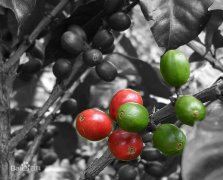
Fragrant with less acidity, reminiscent of Central American coffee beans
It is fragrant with less acidity, reminiscent of coffee beans from Central America. Coffee production in South Africa (SouthAfrica) is mainly in the northeast of the country, from Natal between Transvaal and Mozambique, extending northward to Transvaal, with a southernmost limit of latitude 30 south. Further south, coffee cannot be grown due to the harm of early frost.
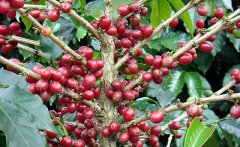
Columbia Cauca Cauca Valley Hope Manor Coffee Manor in Central and South America
The opportunity that the manor was expected to see at that time was Geisha (also known as a geisha). After Panamanian Emerald Manor became famous for rediscovering rose summer in the garden and became a top manor in the world, coffee farms around the world are studying the possibility of planting rose summer, but there is no rose summer variety in Colombia. I hope the manor owner Rigoberto Herrera sent the chief botany.

What are the characteristics of Latin American coffee? How can Latin American coffee taste good?
Professional coffee knowledge exchange more coffee bean information Please pay attention to coffee workshop (Wechat official account cafe_style) Coffee growth conditions due to the main geographical factors: latitude, temperature, topography, rainfall, sunshine and so on, the distribution of coffee producing areas varies from continent to continent. The countries of Central and South America and Africa match the climate and topography of the region at the same latitude and

Coffee in South America
[Colombia] is the world's second-largest coffee producer, accounting for about 12% of the world's annual production, although much lower than the 30 to 35% of Brazil, most of which are high-quality alpine washed beans. Central Colombia is divided into several valleys by three north-south vertical mountains, of which the central and eastern mountains are the main coffee producing areas. Coffee here is named after the market of distribution,